
Issue 04: Sustainable Change
– A Reflection Note for Leaders

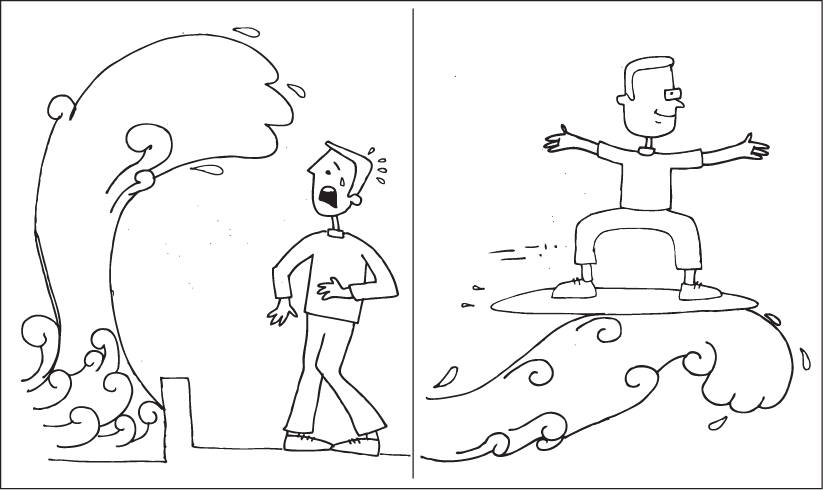
In an age when everything is being disrupted the notion of “sustainable change” becomes important.
To understand this, let us understand change better using 3 reflections.
Reflection 1: What is the nature of change?
Change can be gradual or fast (pace of change)
Change can be marginal or fundamental (scope of change)
Change can be short term or long term in its effects (effects of change)
Change can be imposed from outside or driven form within (cause of change)
Change can be at a business level, at an environmental level, at a product level, or at a human level (unit of change)
Q: Can you use this framework to understand the nature of change your organization is facing?
Reflection 2: How does an organization deal with change?
Does it deal with change on a “case to case” basis i.e. identify the change and respond to it? (reactive approach)
Does it deal with change on a “comprehensive rethink” basis to identify a cluster of changes and design a holistic response to deal with the entire cluster of changes? (proactive approach)
Does it deal with change on a “continuous basis”, i.e. the organization is architected to absorb and handle this continuous change, i.e change no longer is the exception, it is the rule based on which the organization behaves? (sense-respond approach)
In today’s environment it appears that continuous change and architecting organizations to deal with continuous change on a day-to-day basis seems to be the only way organizations can truly thrive/ sustain, i.e. organizations need to deal with change on an ongoing basis in a sense-respond manner.
Q: What is your strategy for change? Is it reactive? Proactive? Or Sense-Respond?
Reflection 3: What does it mean to deal with change using this sense-respond approach?
It means:
Dealing with change in a sustained manner, i.e. all the time without stress building up in the system, and
Dealing with change on a sustainable basis, i.e. the organization’s design takes into account the non-stable nature of markets, customers, production systems, people composition, etc. i.e. all variables are changing, yet outcomes are maintained on a sustained basis.
This is “sustainable change” – being able to maintain key organizational and business outcomes as per design, while retaining flexibility and responding appropriately, in all structural, process, and human dimensions.
Q: What are the non-negotiable business outcomes you really want in your organization - not for today alone, but for the years to come (despite all changes inside & outside your organization)?
 | A guest post by
|